














Donald Trump’s rise to power did more than shock the political establishment in 2016 – it redefined the Republican party, exposed deep divisions within the Democratic party, and reshaped the trajectory of future American politics. When Trump launched his campaign for the first time in 2016, the majority of those in media and the political establishment dismissed his candidacy, viewing his campaign as a spectacle rather than a viable political movement. But something within the public American constituency resonated with the disruptive, outspoken New York real estate developer. Supporters were drawn to his status as a non-politician, his “America First” platform, and his unfiltered, plain spoken communication style, and within one year of his announcement of candidacy, Trump became the Republican nominee to take on Hillary Clinton in the 2016 presidential election.
Trump persistently championed these “America First” policies, promising to create 25 million jobs, enforce strict immigration control, and nationalize the economy, and the simplicity of these guarantees effectively lured in the working class and middle-income white voters who felt left behind by economic shifts, and misrepresented by the political establishment.
The 2016 primaries and months leading up to the election began to plant severe anxiety within the Democratic party, with fear of the erosion of democratic norms, of Trump’s temperament, his authoritarian tendencies, and the normalization of inflammatory rhetoric. But Democrats failed to foresee the future of Trump’s long-term influence, and his victory over Hillary Clinton on Nov. 9, 2016 marked the day that Republicans gained their figurehead, and the future anchor upon which the entirety of the party would latch onto for the next decade.
Trump radicalized the Republican party through two internal mechanisms – conversion, and replacement. Republican officials were forced to adopt his rhetoric and policies or risk losing crucial support from his loyal base. Dissenters who refused to align with Trump were either defeated in primaries, or chose not to seek reelection, effectively purging the “Never Trump” wing from the party’s leadership. Trump nudged the Republican party back to traditional orthodoxy, and made himself a defining feature of Republican identity, and when this was reinforced by “negative partisanship”- or popular loyalty driven by shared dislike for the opposing party- a unique unity and shift from consensus to allegiance emerged, consolidating the Republican party into “The Party of Trump.”
Trump, in the past decade, has managed to do what nearly no other U.S. politician has been able to do in the history of our country. Transcending high partisan loyalty, he has cultivated a cult of personality. This uber-loyalty, unwavering support, and deliberate ignorance that Trump has secured in his constituency is exactly what has allowed him to dominate American politics and secure his second term as President. The Democratic Party has failed to generate the same fervor, with internal conflict that has had resoundingly detrimental effects on democratic success.
Deep divisions between the far-left and traditional moderate factions have made it immensely difficult to develop a cohesive strategy causing a significant loss of support among working-class voters who feel the party no longer champions their interests. Due to the internal conflict and lack of a clear unified leader, messaging is greatly weakened, allowing the party to appear disorganized and inefficient compared to the opposition which presents uniformity. These ideological disputes within the party shift focus away from effectively opposing and presenting alternatives to Republican policy, resulting in a natural electorate swing to the right, who present a cohesive, digestible conservative message.
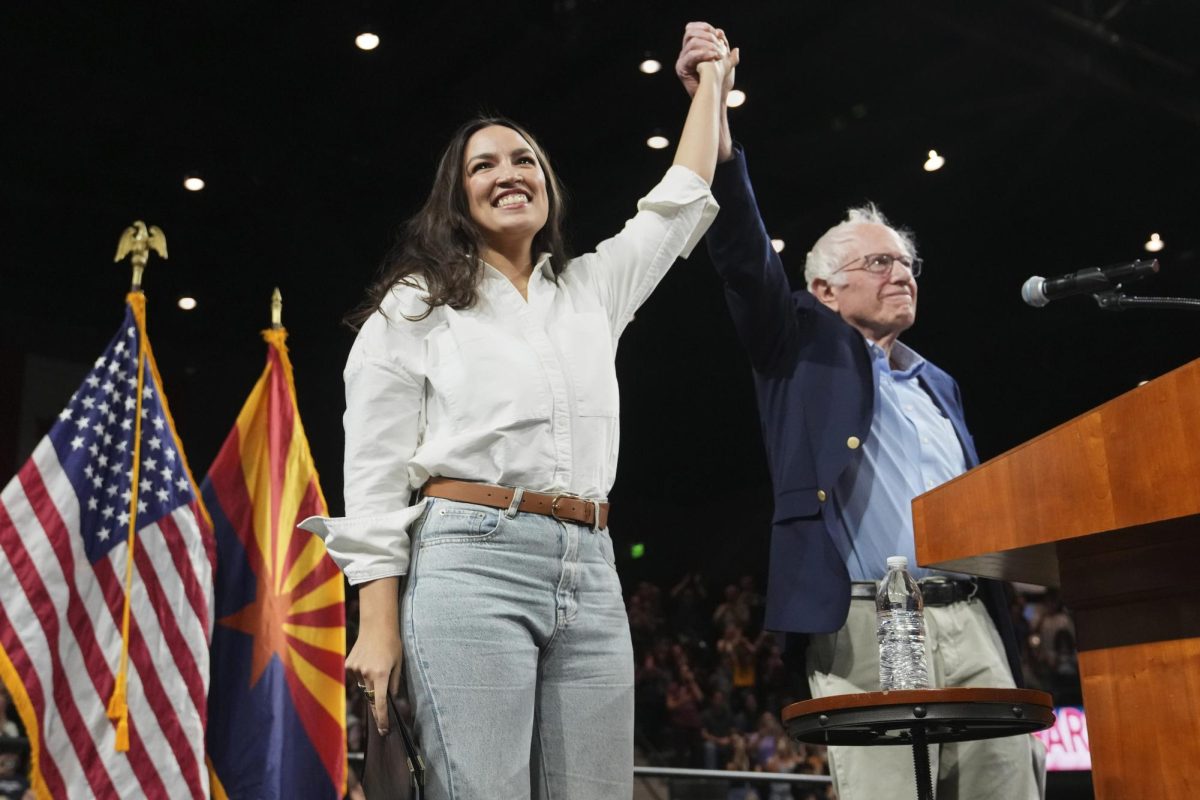
Progressive, left leaning democrats are largely driven by figures such as Alexandria Ocasio-Cortes, Bernie Sanders and the incumbent New York mayor Zohran Mamdani, who champion democratic socialism and highly liberal policy. They focus on opposing the concentration of wealth and power among billionaires and large corporations, aiming to shift influence back to the working class. They demand economic equality and the reduction of the wealth gap by increasing taxation on the wealthy, strengthening social safety nets, and increasing federal minimum wage. These politicians foster a more grassroots-oriented, participatory politics and have gained momentum in recent years despite their polarizing views.
Contrastingly, moderate democrats aim to represent a center-left, pragmatic wing of the party, prioritizing bipartisan cooperation and incremental policy changes over ideological extremes. This faction is represented by politicians such as Abigail Spanberger, Mikie Sherill, and Joe Manchin, who broaden democratic appeal to swing voters, enhancing electability through perceived pragmatism.
Although diversity within the party seems beneficial as it widens attraction to the overarching democratic cause, it poses an extremely critical issue. Moderation fails to inspire voters. As seen in the overwhelmingly successful Trump campaign, radicalism, confrontation, and bluntness can create significant momentum. Centrist democrats alienate the progressive base, compromise too much with a non-cooperative Republican party, and fail to address material needs of the working class, creating an assortment of deficiencies which greatly diminish their electoral appeal. Liberal citizens seek a clear, bold alternative to conservative policies which cannot be found in moderate candidates.
There are substantial tangible effects of this factional friction when elections arrive and voters have not discovered the real identity of the democratic party. Centrism is inherently dampening to the excitement of the party’s most loyal and energetic supporters. With the rise of moderatism in the Democratic party, the messaging weakens, with a focus on technocratic “band-aid” solutions that fail to offer a compelling, fresh vision for the country. Centric politics most importantly undermine the influence and legitimacy of democratic politics in the nation. Constant attempts to “occupy the center lane” as a response to the right establishes the democrats as a reactionary party. Instead of setting the national agenda, and implementing progressive policy, they become a “reasonable” alternative that responds to republican framing.
This political methodology is dangerously short-sighted and allows for slow rightward political realignment in America as a whole. A significant factor of Hillary Clinton losing the 2016 election to Trump was her campaign’s over-reliance on portraying Trump as unfit, attacking his character, and refuting his policy proposals. Rather than promoting a robust, positive message, she overshadowed her own campaign, therefore not resonating with voters primarily concerned about economic decline. The more the Democrats pursue reactionary politics, and continuously compromise with uncooperative Republicans, the further conservatives can push the needle of the nation’s politics right, capitalizing off of the spinelessness of Centrist Democrats.
With the introduction of new-age highly progressive democrats such as Alexandria Ocasio-Cortes and Zohran Mamdani there is a wave of momentum behind the democratic cause. These politicians generate excitement and participation among young generations and the new electorate, meaning the idea of Democratic success is highly achievable. The best hope for the Democrats is a move towards unity and cohesion, an exciting and compelling message, with collective support across the party. With this, Democrats can translate excitement and participation into a movement that represents a truly unified liberal party for America.