





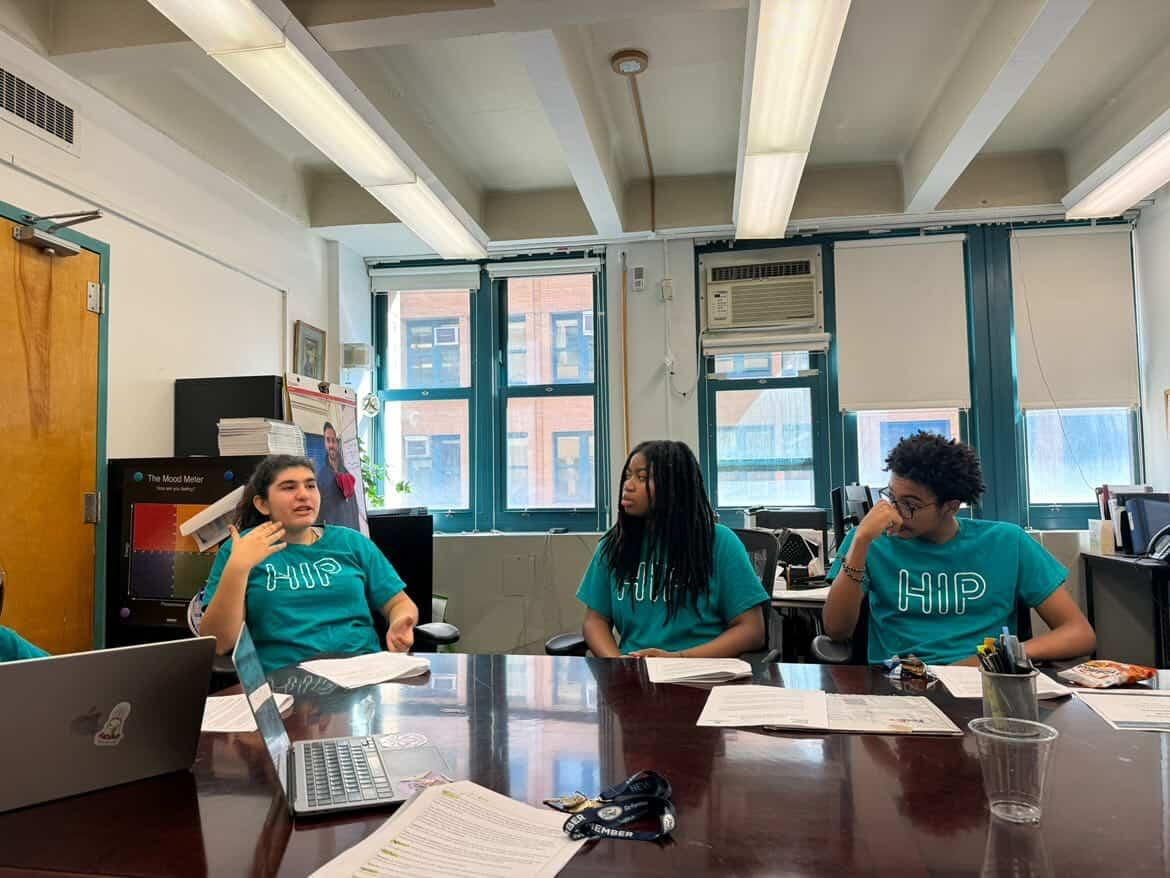


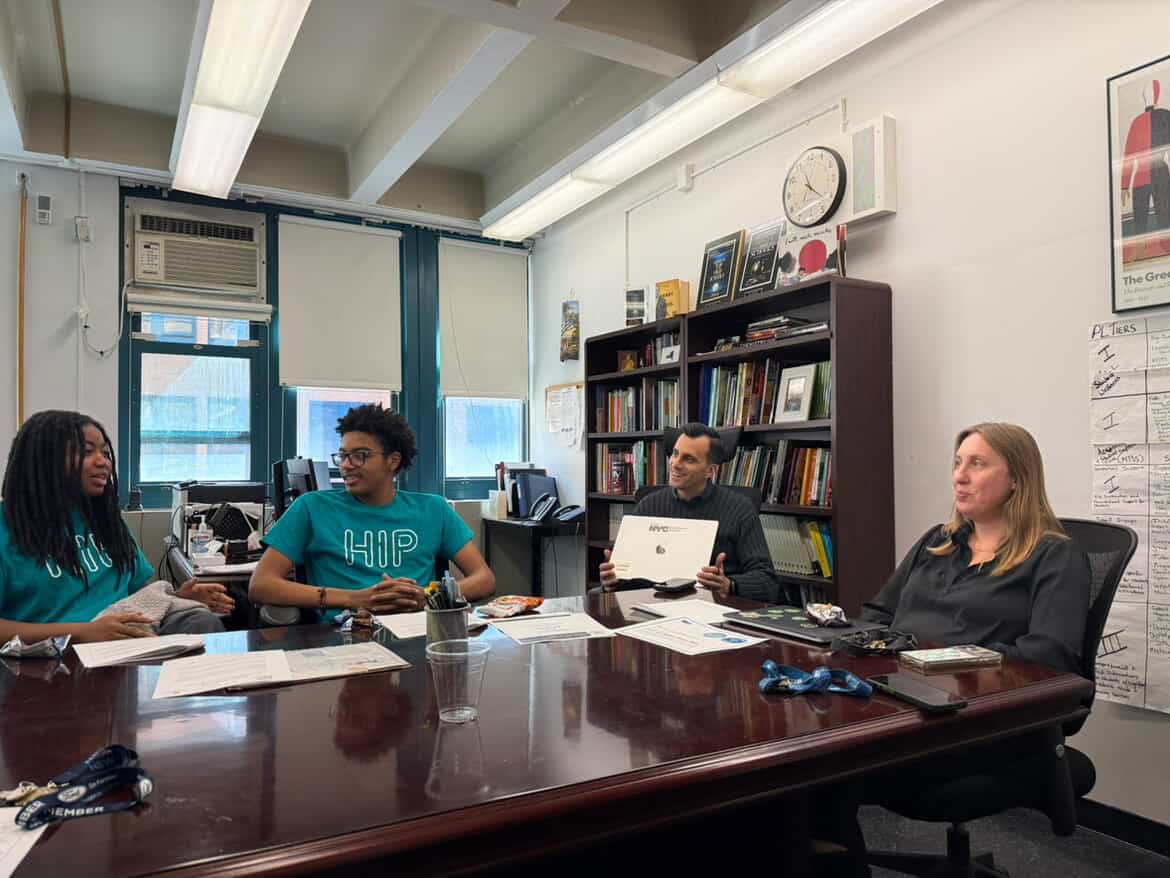









If you walk through the halls of NYC Museum School, you may notice “HIP” signs taped to walls, doors, classrooms, and just about everywhere you turn. Health Information Project (HIP) is a new project introduced to Museum, which is a student-led program that teaches the freshmen health curriculum. But what does it mean to be part of HIP? Being part of HIP is an especially important role for juniors and seniors of Museum. In the 2025-2026 school year, twelve extremely dedicated Peer Health Educators (PHE’s) worked together to deliver health classes to the freshmen class, highlighting how to be healthy mentally, physically, and sexually. But what does HIP mean to PHE’s?
“To me, HIP means supporting my peers when they need help and giving them a sense of guidance,” said junior Sana Siddiq. Teaching HIP helped PHE’s grow out of their comfort zone and learn how to speak in front of young people. Junior Delia Nakatani stated that she has become “more confident in [her]self and has practiced my leadership with fellow smart and driven peers.” She adds that she had “such a positive experience with HIP,” getting to know the freshmen and connecting with people outside of her grade. Nakatani further explained how she’s had “fun” and felt “successful,” even “growing as a person.” When interviewing PHE’s, many had similar responses of learning to adapt to hard situations, learning patience, and developing critical thinking skills. PHE’s share that their individual experiences helped them evaluate their boundaries and the extent to which they can push themselves to be successful as a teacher and peer.
When asked about HIP’s success, junior Nicolas Silverio expressed that he “built a closer connection with the freshmen, creating bonds both in and out of HIP.” He appreciates how “many students are able to answer any question,” showing how being a PHE allows friendships to be made and people to work together. Nakatani also finds HIP to be “successful, especially with this being its first year.” She noticed students that react “positively to the teaching styles,” hoping to further improve through feedback from her class.
PHE’s were also asked if implementing HIP during their freshman year would have changed anything. To this, Silverio agreed “yes,” because “it makes learning health more fun as it’s literally just someone who I see in the halls every day,” further explaining how it can “potentially be a friend teaching me about personal health,” making it feel more down to earth. Junior Margot Sax believes that “more schools should consider implementing HIP into their curriculum,” as “[students] would be learning this type of content from peers rather than adults they can’t relate to.”
So, what advice do PHE’s give to anyone that’s considering joining the PHE team? Silverio recommends not being “so rigid with the lessons” and to “try to connect with the kids.” He urges upcoming PHE’s to “find the best way to work with your class,” but remember that “HIP is something to be taken seriously, and showing up to meetings as it helps you grow as a PHE.” Nakatani also says to “disregard your fears and get comfortable with the uncomfortable.” She added, “as a PHE you are the one that has to reach out, be yourself, and radiate confidence.”
So, if you’re considering joining HIP, know that this experience teaches you leadership skills, communication skills, and allows you to connect with others in your community. But remember, it is a huge responsibility, and it is not something you can slack off on. Be Smart, Be Healthy, and most importantly, Be HIP!