




February is a month dedicated to celebrating the progress African-Americans have made over the past decades. The origins of Black History Month can be traced back to Chicago in 1915, when it was initially established to commemorate the legacy of the well-known American abolitionist Frederick Douglass.
During Black History Month, NYC Museum School spends time honoring and highlighting the various achievements of African Americans while also promoting the teaching of Black history in schools.
February 2026 marks the 100th anniversary of Black History month. Maiya Williams, NYC Museum School’s guidance counselor, explained that she found Milestales “through a DOE vendor that packages Black History Month experiences.” Williams wanted to celebrate Black History differently this year as it’s a special milestone for African-American history and also to “keep engagement.”
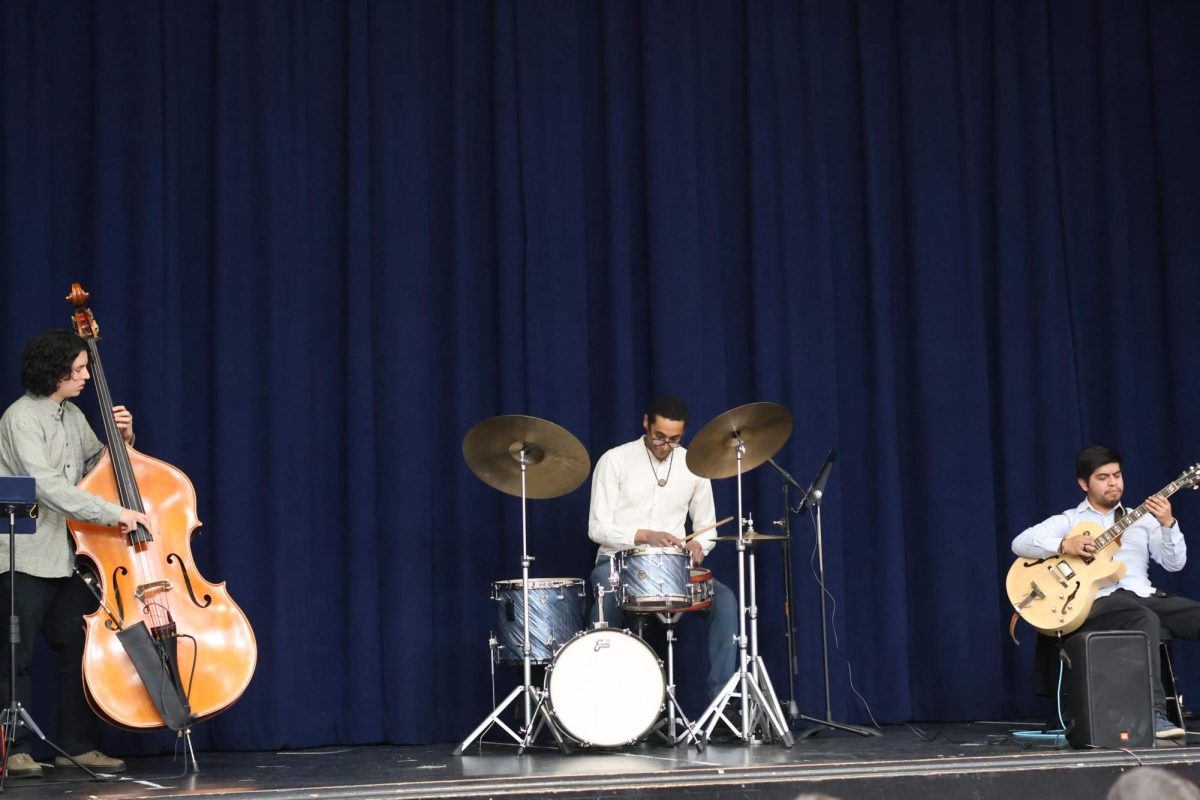
Milestales’ performance featured various African-American cultural music, highlighting the roots and evolution of the diverse community’s musical expression. Through rhythms and harmonies, Milestales brought storytelling through music.
Milestales drummer Orion Turre is a NYC area-based drummer, composer, and educator. Primarily a jazz musician, Orion’s musician interests and work span across genres into rock, hip hop, and R&B.
When asked about the significance of performing traditional music, Turre said, “For me… I can share this culture with the rest of the world, [it’s very] fulfilling. I also compose and write music, so performing my own compositions is spiritually satisfying.”
Between songs, the musicians explained the background of their compositions and how their songs traced aspects of African roots to modern day genres. For many students, hearing about the roots of the songs was a unique experience that created a sense of understanding that a history presentation wouldn’t have been able to evoke.
Junior Rumaisah Sallah said, “There was one song I recognized, which was ‘When the Saints Go Marching In,’ and I liked that a lot.” She added, “…there were a lot of people that I saw around me who were also engaged and bobbing their heads to the music.”
Sophomore Carter Ea Shapiro said, “I remembered the drummer mentioning rhythm and even taking the time to answer questions about the fine details of his compositions. As a musician myself, I thought it was nice to hear another musician’s thoughts.”
Milestales’ performance was especially appealing to some students that played instruments or had previous experience with music. Specifically, junior Akeera Stith mentioned that, as a drummer herself, she felt as if she could “hear the talent in the music,” also noting that the music was “sensational.”
Along with inviting Milestales, Williams also provided an insight into the significance of music in activism and the growth of African-American music’s influence on the world. She said, “Music is [not only] at the forefront of black culture [but it] has trickled into other cultures and you see a lot of African influence in music today.”
When asked about reactions to student-led performances versus professional vendors, AP United States History teacher Jesse Johnson referenced last year’s Black History Month show and explained how students might see the dancers and say “she’s my friend,” as opposed to taking away anything meaningful from the performance. He added, “if we’ve got professionals [up] there, then you’d focus more on the aspects of the performance.” He concluded that “it would be best to have a balance” between the students and trained professionals.
Furthermore, Sallah, also a member of the dance team, said it would be optimal to have “half student and half professional” performance, as it may help engage students with “lower attention spans.” Senior Liam McCarthy added, “I don’t see why we can’t do both. While the dance team is fun and engaging, I do think it’s very beneficial to have professionals come in and teach and educate.”
Overall, there is a growing trend across students and faculty to have Museum School aim to include more representation of African-American history in future celebrations, as McCarthy said “we did just only get the music aspect” instead of “black history as a whole.”
During Black History Month, we spend time honoring the diverse African-American history and culture. Although only February is dedicated specifically to Black History, African American culture and accomplishments should be celebrated and respected all year round.