

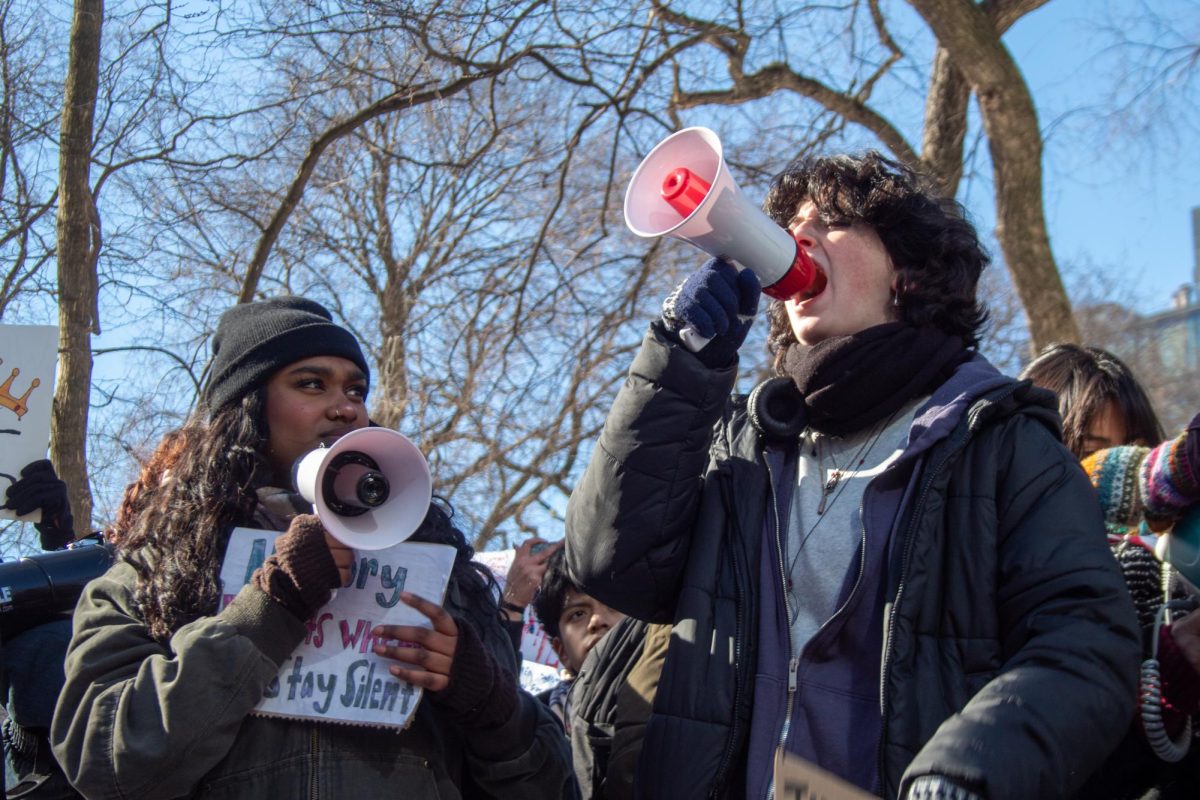
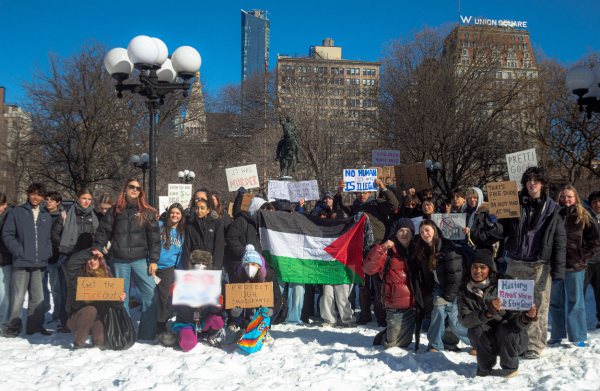
NYC Museum School students participated in a student-organized national walkout to protest the actions and policies of the U.S. Immigration and Customs Enforcement (ICE) on January 30, 2026. The walkout, which took place during the school day, was planned and led by students aiming to draw attention to concerns about violent immigration enforcement and its impact on communities.
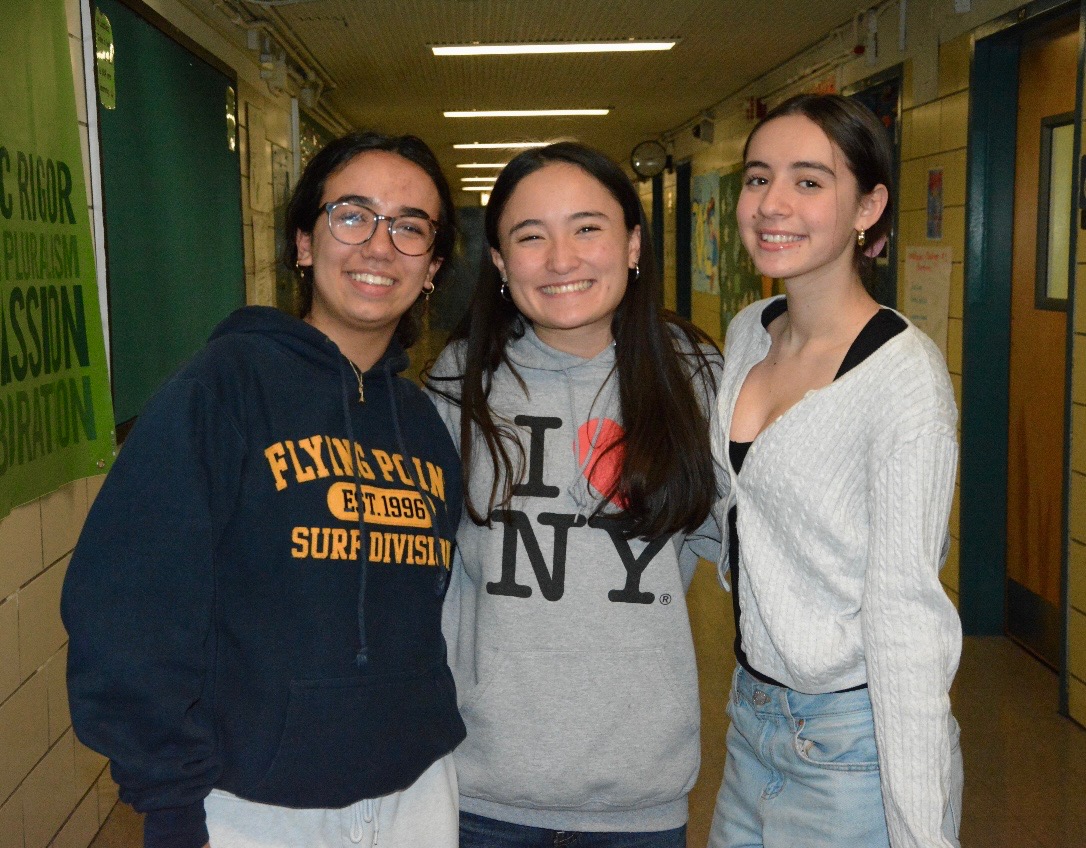
The walkout was organized by juniors Fionn Daley and Emily Crepon-Wall, who said the idea emerged right before the event in response to a larger, national strike. “We’d been thinking about protesting for a while and thinking about what’s happening in the world and what we can do about it,” Daley said. He said he felt that “this was a really big way to send a message to the whole of New York City—the whole country—that we students care.”
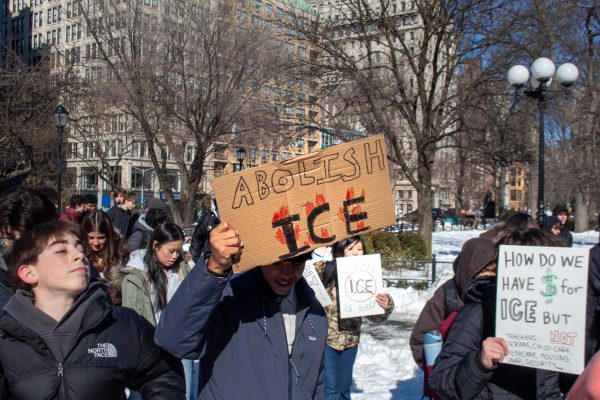
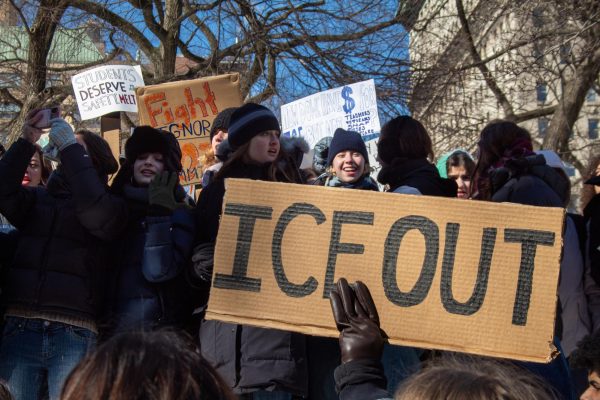
Planning for the walkout began the night before the event, when students began to connect with other high schools. “Fionn called me the night before and said there was a national strike … we needed to collaborate to get the whole school to walk out,” Crepon-Wall explained.
While they were initially nervous about the potential turnout, they estimated hundreds of students showed up. Daley attributed a large part of this success to social media, saying “I felt more confident because of how widely the message spread on social media. Even if people didn’t follow me directly, reposts helped the message reach them.”
Many students said they first learned about the walkout through social media or friends. “I heard about the walkout through Instagram,” said junior Samuel Rahavy, just like numerous other students who cited Instagram posts, messages, and word of mouth as their informants prior to the event.
For a majority of those who attended the walkout, their actions were driven by personal connections and concern over others’ safety. Rahavy said he attended because he has “a lot of friends who are first or second-generation immigrants.” Michael Rodriguez said he walked out because “I am a minority myself of Puerto Rican descent, so it meant a lot to me.” Mei Shibata agreed, saying she went because “I wanted to fight for my rights and also because my parents are immigrants.”
Other students mentioned they felt comfortable enough academically to be able to miss class, with Junior Willow Turner explaining that they “felt safe enough with [their] grades” to participate. Similarly, Maria Sidesinger, another Junior at the Museum School, said, “I go to school five days a week, and I’ve been going for years of my life, and this is something that ultimately was more important to me.”
Peter Bagayoko, another junior, had similar reasons for going, “I went because I believe in the message. ICE is absolutely disgusting…they’re tearing families apart.”
Luke Wyatt agreed. “It’s scary what’s going on right now. So you know, I have an opportunity to do a tiny thing, so why not?”
Not all students who supported the walkout chose to attend. Aiden Vasquez said he did not participate because he felt he could not afford to miss school, though he added that he believed it was “for a good cause” and described the students who attended as “very admirable.” Jenna Moltner added, “I would go if I could because I think the cause is important and I think it’s to advocate for people’s rights.”
Opinions on the walkout’s impact varied, but many students described it as meaningful. Willow Turner said it was “a strong show of solidarity,” while Shibata highlighted the scale of participation, saying “seeing thousands of students walk out and care about the issue was really impactful.” Bagayoko said, “Even if there weren’t immediate changes, it was important that students showed they’re aware of current events.”
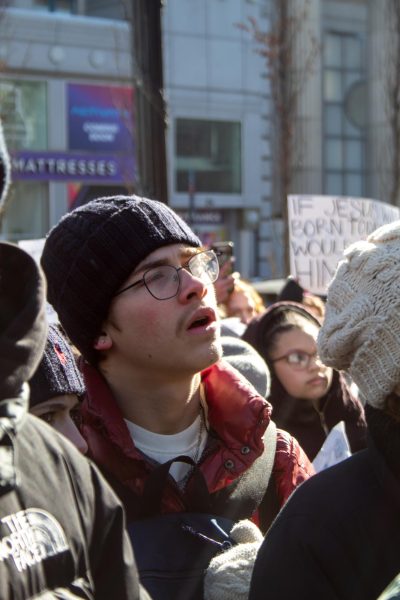
When asked whether they felt the walkout was successful in spreading awareness in protest of ICE, Crepon-Wall said she felt that it was because “it demonstrated how, even though we should be learning and in school, there are issues that are more impactful and reasons for us to walk out.” Daley agreed before adding on, “We walked out for those students and for Minneapolis. We carried their voices, and we just tried our best to represent them in the way that they should have been represented.”
AP US History teacher Mr. Johnson said he became aware of the walkout before the event, hearing about it directly from students. He explained that while participating students were marked absent, the walkout was not penalized, noting that “it would be kind of weird to punish my students for practicing civil disobedience,” given the class he teaches. Mr. Johnson estimated that more than half his students were absent and that “for most of the kids I saw, there was at least some genuine interest in trying to make some sort of change and send a message.”
Reflecting on the walkout, Crepon-Wall emphasized the broader significance of the protest, saying, “I think that they need to wake up and realize that what’s affecting New York is affecting the entirety of the United States.” She added that student activism plays a major role in raising awareness, arguing that students “need to march, and they need to be loud,” because many may not yet realize the wider impact of these issues.

Sadie Stoller • Feb 12, 2026 at 8:37 pm
These photos are amazing!
fionndaley • Feb 4, 2026 at 7:12 pm
Great commentary on student perception!