








It’s strange how comfortable we’ve become with the end of the world.
With the persistent threat of climate change, residual damage from the pandemic, the Doomsday Clock being set the closest it’s ever been to midnight, and neighbors turning against each other, we are faced with constant reminders of how humankind has beckoned its own destruction.
Post-Apocalyptic films endure because they strip life down to its essentials: who we care about, what we’re willing to do for each other, and what we refuse to give up. Despite often being very far from reality and revolving around things that are fantastical, they act as mirrors for our deepest contemporary anxieties, translating the abstract fear of global collapse into intimate, human struggles.
Following are a few films that I feel perfectly encompass themes that resonate with the specific tensions of the modern world, proving that even at the edge of the abyss, our humanity is defined by trust, love, and hope.
28 Days Later (2002)
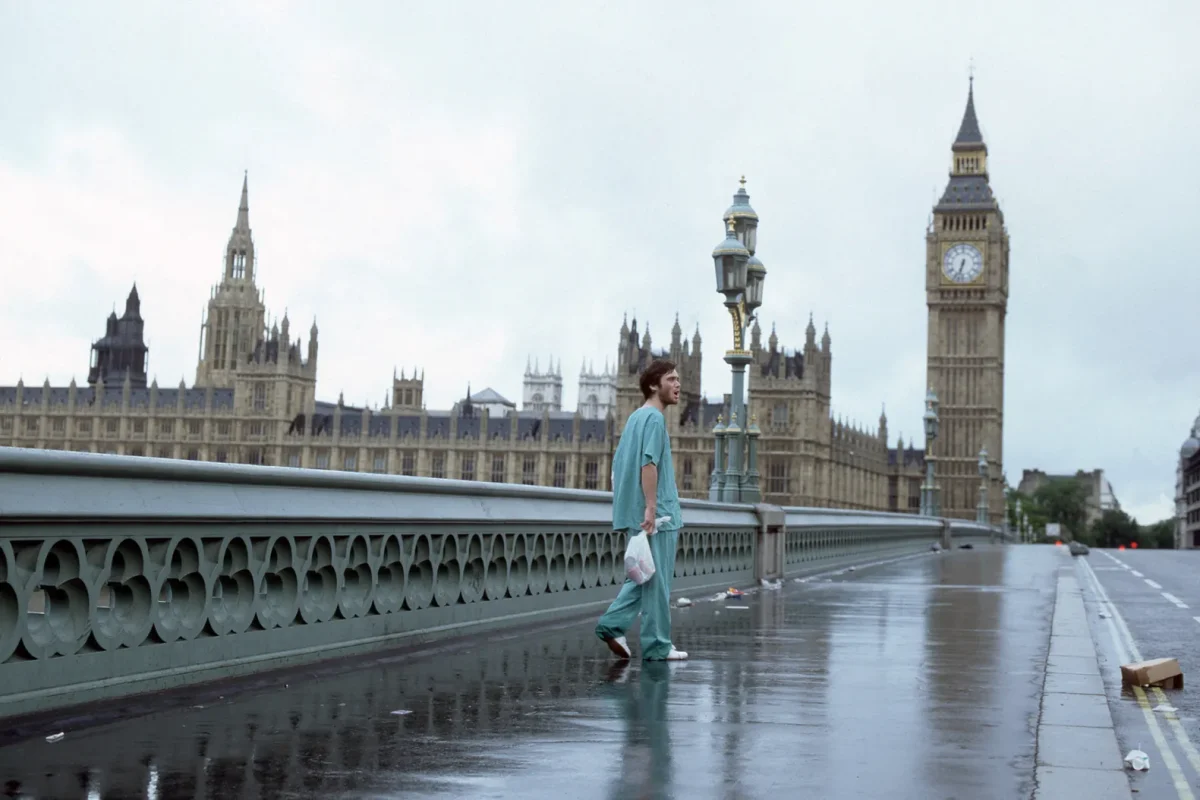
Directed by Danny Boyle, 28 Days Later is set in a post-apocalyptic world in which a courier named Jim, played by award-winning actor Cillian Murphy, wakes up to find London abandoned after a highly contagious “rage virus” has decimated the population, turning the infected into frenzied, fast-moving killers. The plot follows Jim and a small group of survivors as they navigate the desolate landscape, fending off the infected, ultimately discovering that other humans are actually the true danger.
While the concept of people becoming literal zombies seems far from reality, it is actually far more realistic than many realize. Throughout history, but even more so now, people have been indoctrinated into believing propaganda that is spewed by those in power, either because it aligns with their own morals, or more likely because the masses are doing so and thus feel pressured to do the same. When those leaders inevitably fall short of their ambitious promises, either because they are unable to fulfill them or because they would rather save themselves instead, we are met with the harsh reality that the people that we’ve been told to trust have turned their backs on us. 28 Days Later explores how these institutions, like the military, can lose their original purpose after a total societal collapse. Rather than acting as a stabilizing force, the remaining power structures can become isolated and self-serving, adopting a “survival at any cost” mentality that prioritizes their own continuation over the ethical standards of the world they left behind.
All in all, 28 Days Later is a masterpiece that contains endless symbolism to establish that trust is a risk: the emptiness of London reflects isolation, the Infected being rage personified, and those who are expected to protect becoming the biggest danger. Boyle and writer Alex Garland aptly created the movie to act as a reflection on post-9/11 anxiety. Using the horror premise to explore themes of violence, authoritarianism, and societal collapse, it acts as a perfect representation of how every safe haven can become a threat.
Shaun of the Dead (2004)
Shaun of the Dead covers a completely different theme, but rings just as true: the apocalypse doesn’t change who we are; it simply reveals who we love. Directed by Edgar Wright, the film follows Shaun, a downtrodden North London salesman whose mundane life of drinking at The Winchester with his slacker roommate is interrupted by a zombie apocalypse. Armed with a cricket bat, a shovel, and sharp British humor, Shaun must lead a ragtag group of his loved ones through the zombie-infested streets to the safety of his favorite pub in a desperate attempt to save his mother and win back his ex-girlfriend.
Shaun of the Dead asks a deceptively simple question: If the world ends tomorrow, who would you fight to keep? Before the first drop of blood is spilled, we see a cast of characters already living like ghosts, stuck in the numbing routines of dead-end jobs and repetitive nights at the pub that mirror the aimless wandering of the undead. The crisis forces Shaun to finally wake up, proving that loyalty is an active choice rather than a habit. As the film poignantly reminds us that grief doesn’t wait for you to be ready, he is forced to mourn his mother and his best friend in the heat of battle, processing the ultimate loss while still holding the cricket bat. Ultimately, the film resonates because it mirrors how our own times of struggle strip away the trivial, leaving behind a fierce, protective love for those who truly matter. In a modern world that can often feel increasingly fractured or overwhelming, Shaun’s journey reminds us that our greatest survival instinct isn’t just to stay alive, but to keep the people we love alive with us.
Children of Men (2006)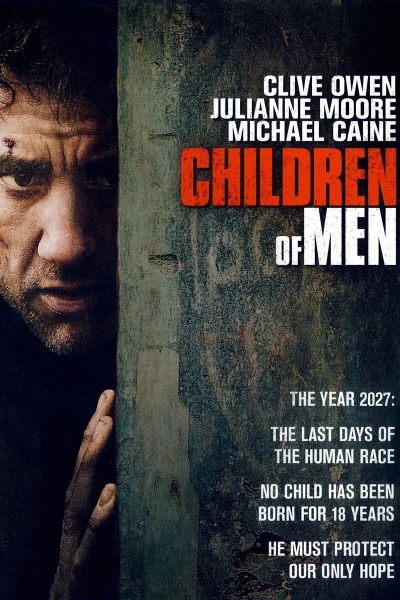
Finally, we have a film that embodies hope in one fragile, human thing. Set just one year from now, Children of Men takes place in a dystopian future facing extinction due to global human infertility. Theo Faron, a disillusioned bureaucrat, agrees to help transport a miraculously pregnant refugee to safety. Amidst societal collapse and violent political chaos, he must navigate warring factions to deliver her to a rumored scientific sanctuary.
In Children of Men, director Alfonso Cuarón uses a world gripped by permanent infertility to argue that hope is not a grand, abstract concept, but a fragile, human responsibility that requires immediate protection. The film’s dystopian Britain, defined by militarized borders, electrified fences, and the brutal detention of “fugees” in squalid refugee camps, serves as a hauntingly prescient reflection of our modern world. While the premise of total sterility is fictional, the constant despair mirrored in scenes of caged migrants and bureaucratic cruelty feels especially applicable today, echoing real-world geopolitical crises and radical right-wing populism. Amidst this managed decline, the “miracle” of a single pregnancy acts as a vulnerable entity that demands action over apathy. The film establishes that hope is a burden; it is the screaming infant in a war zone that forces even the most violent soldiers to pause in awe. By stripping away the future, the film highlights that our humanity is tied to our ability to safeguard the most disenfranchised, proving that even in the bleakest apocalypse, a single, fragile heartbeat is enough to justify the struggle for a better world. Children of Men doesn’t argue that humanity deserves saving. It argues that hope survives anyway—fragile, inconvenient, and entirely human.
In the shadow of collapse, the apocalypse asks only three things: who can we trust when systems fail, who do we love enough to stay for, and why keep hoping when the future seems impossible? These films remind us that when the world outside grows cold, our survival depends entirely on the warmth we provide one another, making the radical act of caring for each other our most vital form of resistance.